
Are My Cakes Good Enough to Sell?
Are you wondering whether your cakes are good enough to sell?
The fact that you’re even asking that question is usually a sign that you’re already starting to think more like a cake business owner than you realise.
If people around you love your cakes and keep telling you that you “should start a business,” that’s a really positive sign. It means your baking already has value.
But there’s an important difference between being someone who bakes lovely cakes… and being someone who can run a consistent, sustainable cake business. And that gap is where most bakers underestimate what’s actually involved.
So what does that actually look like in practice? How do you know where you stand? And how can you feel more confident about whether you’re ready to sell your cakes?
These are questions I go deeper into in Bake to Business. It’s not just about baking and cake decorating techniques - it’s about building consistency and confidence so that your cakes sell for what they are worth.
What “good enough” actually means (what most bakers get wrong)
CONSISTENCY:
Consistency is what makes baking feel easier over time - because you’re no longer guessing what the result is going to be each time.
Without it, every bake can feel slightly different. One day it works, the next day something goes wrong and you’re not quite sure why.
And that’s usually when baking starts to feel more stressful than enjoyable - especially if you’re trying to do it regularly or for other people.
STRUCTURE:
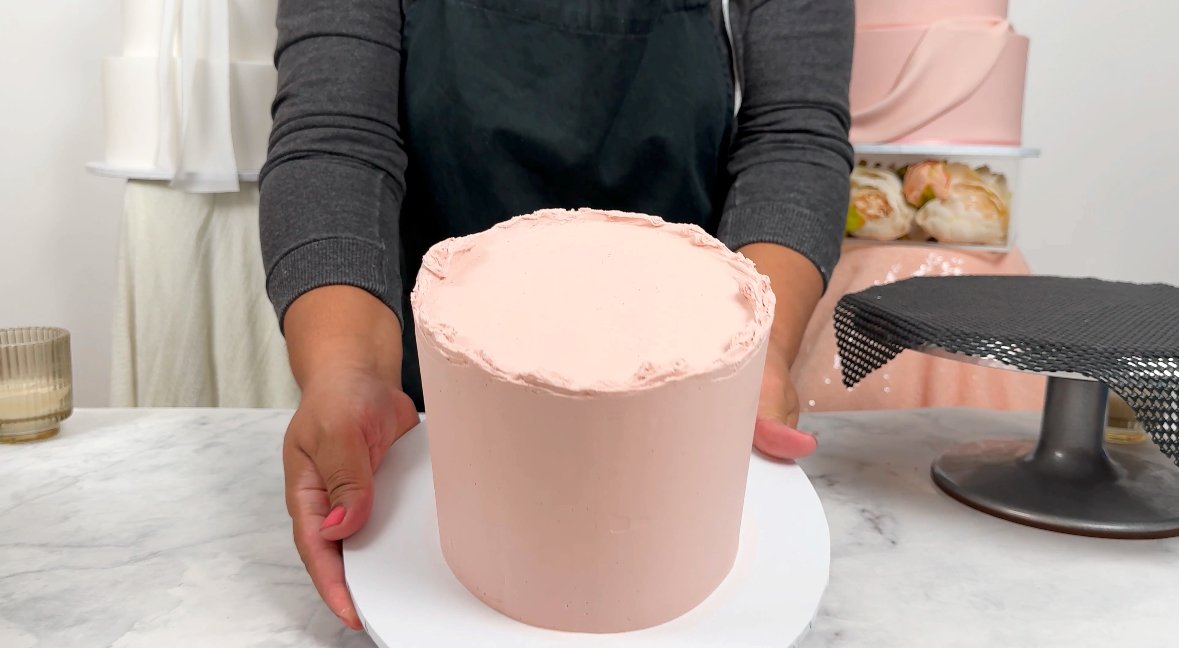
If you’ve ever pulled a cake out of the fridge only to find it leaning, bulging, or slowly losing shape, you already know how frustrating structural issues can be.
And the difficult part is that it doesn’t always look wrong straight away — it often shows itself after stacking, filling, or resting.
That’s why structure isn’t just about support materials — it’s about how your cake behaves over time.
FINISH:
You know that moment when you think the cake is finally perfect… and then the final smoothing or scraping changes everything?
That last stage is where many bakers lose confidence - not because the cake is bad, but because achieving a clean, professional finish takes consistency and control.
And if you’re thinking about selling your cakes, this is the stage customers will always notice first.
RELIABILITY:
What do you do if your ganache splits, your fondant bulges, or gravity has taken its toll on your tiered cake?
Do you have the tools to fix it in the quickest and most efficient way within the time frame you have?
When you move into selling your cakes, there’s a shift — you’re no longer just baking for fun, you’re responsible for delivering a professional-looking product under pressure.
CONFIDENCE
A lot of bakers hold themselves back - not because their cakes aren’t good enough, but because they assume they’re not ready yet.
Thoughts like:
“I can’t charge that yet.”
“I’m still learning.”
“I’ll start properly once I’m better.”
These aren’t skill issues — they’re confidence signals.
And if you’re thinking about selling cakes, this is something worth paying attention to earlier, not later.
Signs you might actually be ready (or very close)
If you’re still on the fence and feeling uncertain about whether you’re ready to start selling your bakes, here are some things to consider:
People are already complimenting your cakes
You’re being asked for orders
You’re thinking about pricing already
You’re noticing your consistency improving
These are just a few of the signs to look out for.
And if you’re reading this and want help to see it more clearly, I’ve created a simple “Is Your Baking Ready To Sell?” checklist to help you figure it out.
What most bakers underestimate
If I could go back and do things differently at the beginning of my baking business, I would definitely have given these points more thought.
Consistency matters so much more than occasional perfection. As your business grows and your customers expect more, you’ll need reliable systems in place to keep things running smoothly - hit and miss results quickly stop being an option.
Managing expectations is another big one. Your customers’ expectations need to be met or exceeded, but also need to stay realistic based on what you can consistently deliver.
Pricing and reliability matter just as much as taste. If you bake a great cake but end up making less than minimum wage, that’s something that needs to be addressed if you want your business to grow - not stay as an expensive hobby.
And as your business develops, customers will expect more from you. Especially around reliability - response times, delivery, deadlines, and communication all become part of what they are trusting you with.
This is the piece that brings it all together - are you emotionally ready for the responsibility and challenges that come with starting and building a cake business?
The rewards are far greater, but in order to avoid burnout, resentment, or quitting a few months in, this part really matters.
Inside Bake to Business, this is exactly what we focus on - helping bakers build the consistency, technique and confidence needed to move from hobby baking to reliable, sellable work.
Is your baking ready to sell?
If this has made you think a little differently about where you are in your baking journey, that usually means you’re closer than you thought.
Being “ready” isn’t just about how your cakes look - it’s about whether you feel consistent, confident, and able to handle the responsibility of selling them.
If you want a bit more clarity on where you are right now, I’ve created a simple “Is Your Baking Ready To Sell?” checklist to help you figure that out.
And if you’re at the stage where you want to start building more consistency and confidence in your cakes, Bake to Business is where I go deeper into that side of things.